Open by appointment.
Canton Historical Society
  • Home
  • Research
  • About
    • Visit
    • Online Store
    • Membership
    • Support
  • News

Where's The Fire?

8/5/2025

0 Comments

 
PictureThe Hunneman in 1947.
We are so pleased to report on the progress of the conservation and preservation of one Canton's hottest artifacts - the Hunneman Hand Tub - one of Canton's first fire engines.  This early piece of fire apparatus was built for Ponkapoag in 1829 and features copper from the Revere & Son Rolling Mill.

The subject of the project is an artifact that was built expressly for the town and delivered into service on August 26, 1829. Having survived over 196 years, the artifact is undergoing conservation and preservation in the hands of a seasoned and highly professional conservator in Pennsylvania who specializes in materials such as wood, metals and leather. It is critical to note that this is a preservation project as opposed to a “restoration” project. The goal is to stabilize and conserve this item so that it can be interpreted and enjoyed by the public for decades to come.

The project features a new wooden cradle under the original pump, removal of varnish with a specially formulated solvent, and the casting of a few parts that had been lost over the years. The project will be done by the end of September. Upon completion, the Hunneman will be on permanent loan to the Paul Revere Heritage - Museum of Discovery and Innovation. Attached are progress photos. Please note that this project is funded by the Community Preservation Act. 

Historical Record
The first recorded instance of a fire engine being located in the town of Canton, Massachusetts is a record from 1825.  Early records from the Hunneman Fire Engine Company of Roxbury, Massachusetts show that a fire engine was constructed and delivered to the Massapoag Woolen Mill, Canton, MA. At the time, the only known woolen mill was the Boston Manufacturing Company (The Stone Factory) located at the intersection of what is today Walpole and Neponset Streets. Number 104 – Massapoag Woolen Mill was delivered on February 19, 1825.
 
The first record found in Annual Town Meeting minutes referring to fire equipment was on April 6, 1829 under an article "to see if the town will vote to purchase one or more engines and to adopt any measures relative thereto." It was voted to appoint a committee of seven to inquire into the expenses of such an action and its desirability. The Committee reported in May that engines would cost $250 each; hose would be 62 1/2 cents per foot and couplings $2.50 per joint. They recommended forming three companies of twenty one "efficient" men each, the majority of whom would be exempt from militia service, that each company be permitted to purchase an engine, and that the Town Treasurer pay each company $200 for the engine. Any cost over the $200 would be contributed by the engine company itself.
 
Two engines were bought, one for Ponkapoag, and one, the Enterprise, for South Canton. In 1833 a third engine was purchased for the Canton Center station. At that time Canton Center was considered to be the area later known as Canton Corner, which was from Eliot street to Randolph Street. South Canton was then what we call today Canton Center and was also known then as "The Village."

Following the spring Town Meeting, the Hunneman company records show that two engines were received by the town on August 26, 1829. The two engines were delivered by ox cart and were numbered No. 132 (Ponkapoag No. 2) and No. 133 (Enterprise No. 3). Records show that the town paid $365.00 cash for No. 132 and $410.00 for No. 133. The overage may be attributed to the hoses and extras that were included with each of the machines.

Over the subsequent years from 1825 through 1891 the No. 132 was in use and moved between Ponkapoag and the fire station located at Canton Corner. In 1891, the Fire Engineers Report stated that there were still two hand engines, one at Ponkapoag and one at Canton Corner. The fire chief described them “things of the past and not worth scrap value.” The machine that we seek to conserve may have been stored in the basement of Memorial Hall sometime before February 1901. By 1907-1908 the town’s inventory of fire apparatus no longer indicates any hand-tubs at any of the town’s engine houses. The Canton Historical Society opened its headquarters building in 1911 and it is likely the Society took possession of the hand tub at that time.

While perhaps as many as five Hunneman fire engines were delivered to the Town of Canton over the years, the only surviving piece of equipment is No. 132. It is an earlier example and closely related to the hand tub that was used at the Revere Copper & Rolling Mill and the Kinsley Iron Works.
​
Historical Association
William C. Hunneman was “an enterprising apprentice of Paul Revere.” Paul Revere operated his original foundry in Boston and Hunneman learned the trade of metallurgy and innovation under the eye of the master, Revere. In 1790 Hunneman founded his own business to furnish the necessary hardware to support the leading industries of the day, shipbuilding and clock making. Soon he started to make fire engines, and from 1792 to 1883, the company that bore his name furnished firefighting machines around the globe.

The name “hand tub” or “engine” derives its origin from the fact that the body is, actually, a tub design to hold water. Formed from sheets of copper, turned out by the Canton works of Paul Revere sheathe the bottom of ships, the fire engine was an oblong wooden box, lined with sheets of copper to seal in the water, and a pump was installed to force the water through hoses. The pressure of the hand tub could force water up to 125 feet and was used mainly to contain the spread of fire from neighboring buildings in the event of a fire

Owing to the historical connection to Paul Revere through the apprenticeship and the extreme likelihood that the foundry in Canton provided the copper for the hand tub, this project has a close affinity to the new Museum of Discovery and Innovation at the Paul Revere Heritage Site. The fire engine is a remarkable artifact that shows how the ingenuity, enterprise and scale of manufacturing touched and enabled several industries and the entrepreneurial spirit. The Canton Historical Society is a proud steward of this great artifact. 

0 Comments

Ready, Fire, Aim... The Firearms Collection

4/21/2024

1 Comment

 
The Society held a rare presentation that featured the firearms and swords from our collection. George Wilson shared information about our revolutionary muskets and rifles. We also learned about our significant swords and other military curiosities. The Society has been collecting itesm since 1871, and the firearms collection will soon undergo a preservation plan that will help restore and preserve these unique and valuable items. 
1 Comment

Community Preservation Act - Artifact Exhibit

5/1/2016

1 Comment

 
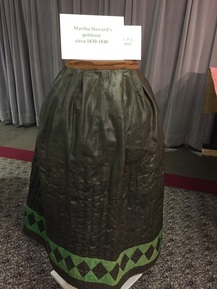
PictureMartha Howard Petticoat (circa 1824)
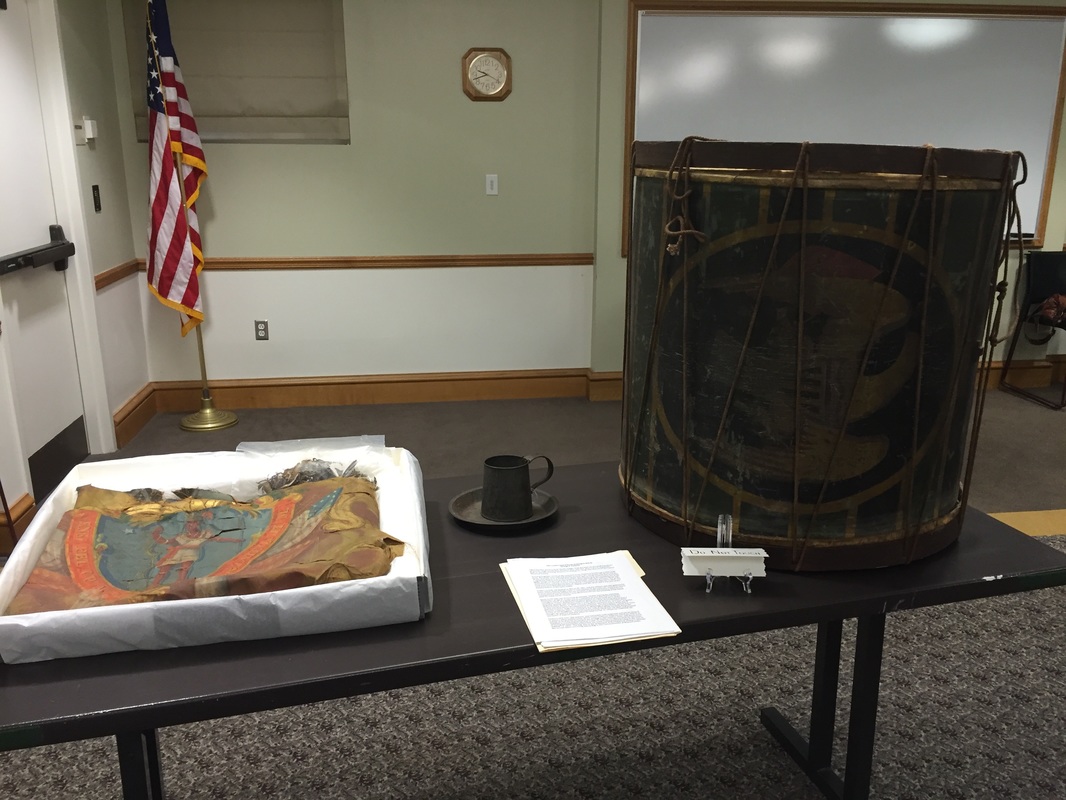
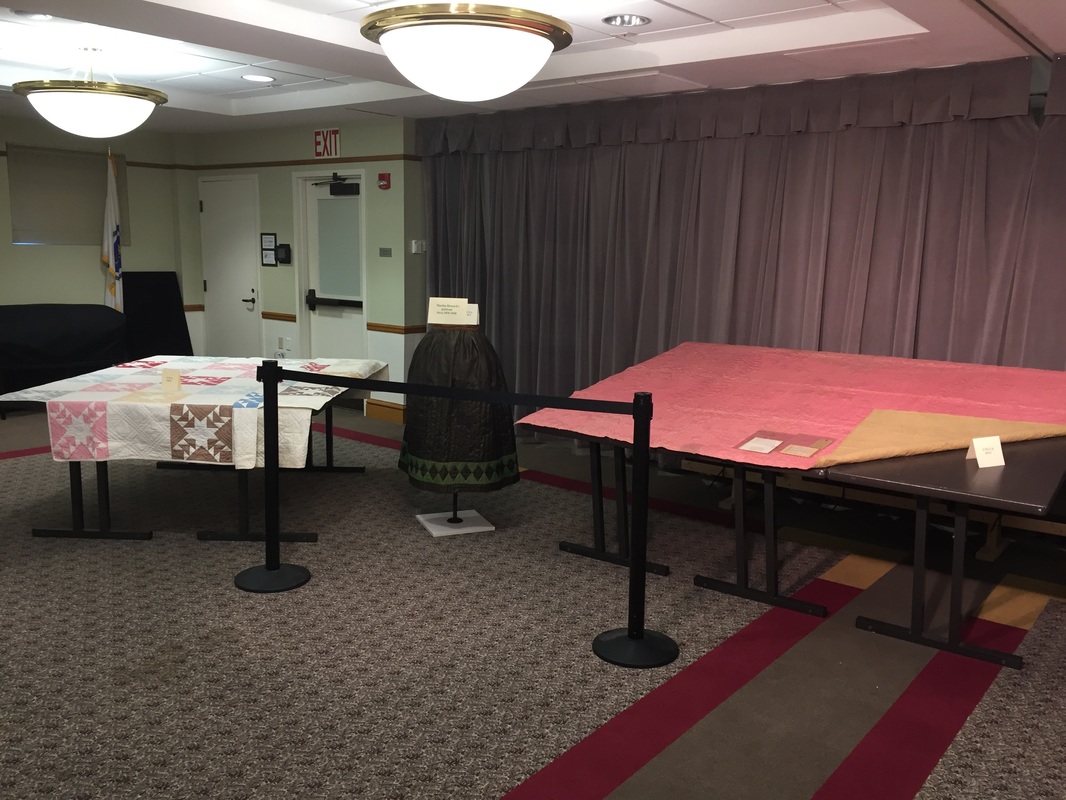
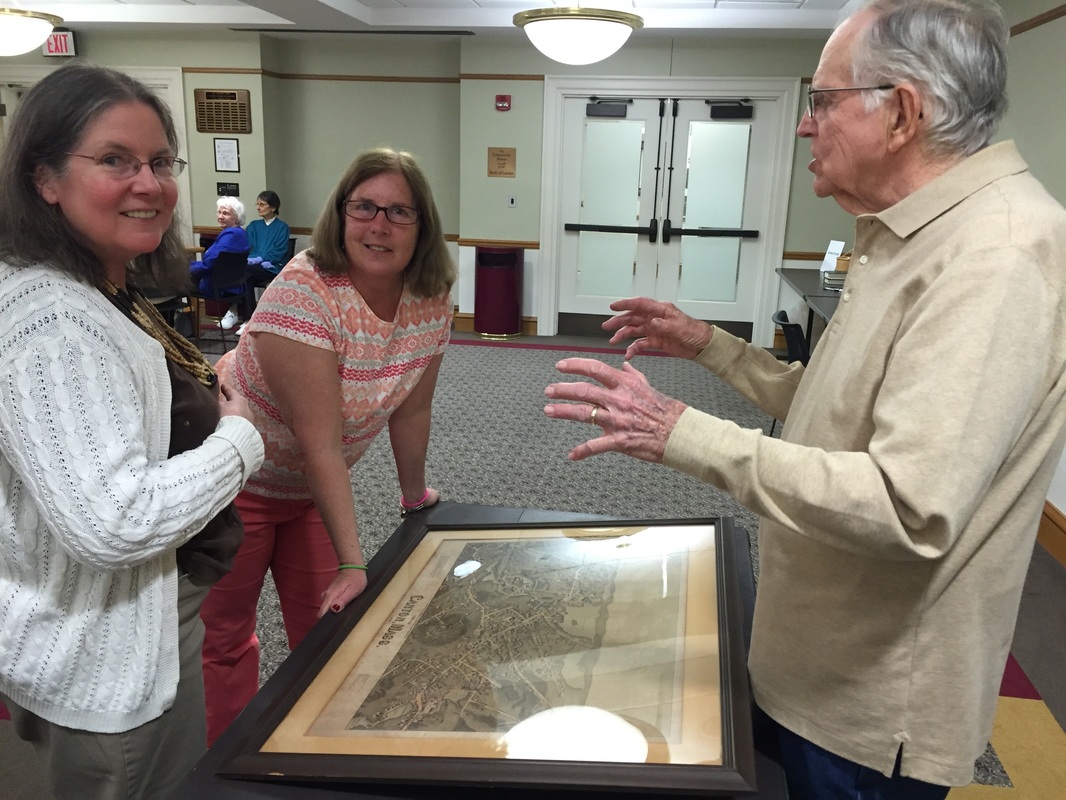
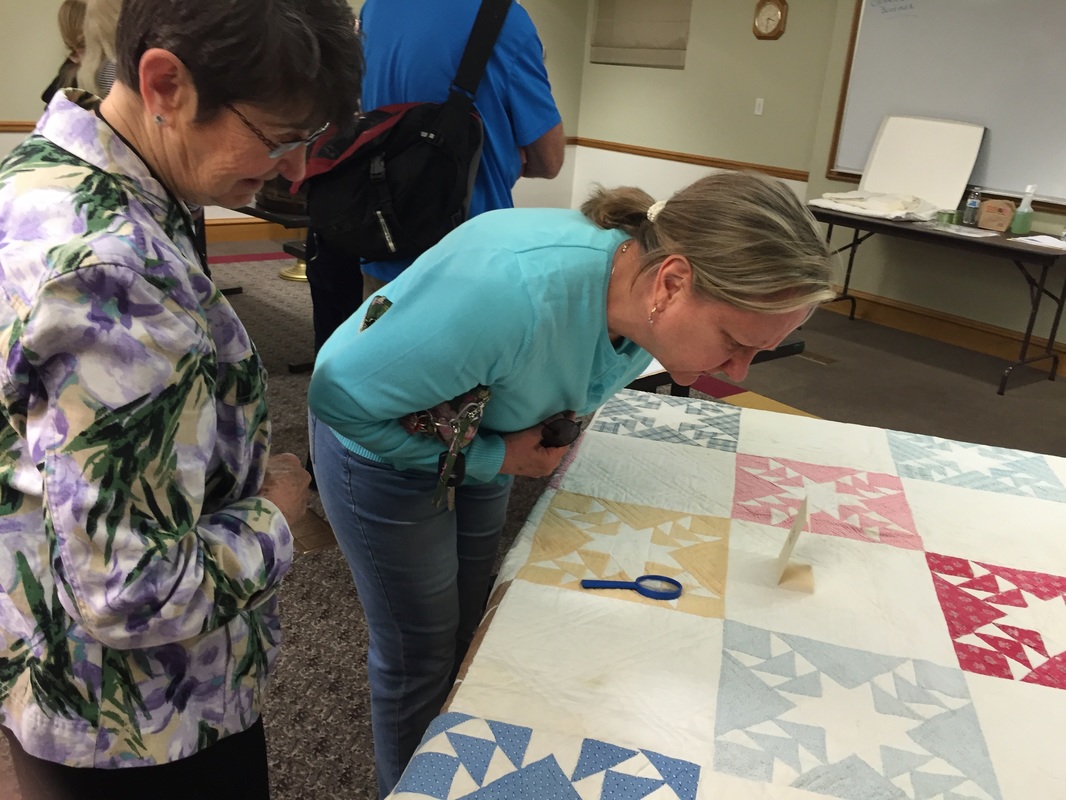
The Canton Historical Society held a special exhibit at the Canton Public Library as a way to showcase the breadth of nationally recognized artifacts from the collection. On display, the public had a firsthand opportunity to see the Martha Howard Whole Cloth Quilt which is the oldest and perhaps finest of its kind in America. The exhibit was the brainchild of Marie Gibbs, who has tirelessly devoted her passion and energy to preserving our early textile collection. In addition to two quilts., the exhibit also featured the premiere of the Martha Howard Petticoat which had been conserved through a generous grant by the Canton Community Preservation Act (CPA). The petticoat, dating to the early 1820's, had most recently been painstakingly preserved by Windsor Conservation in Dover, MA. The process took almost a year, and now is a resplendent  example of a period dress that was made by one of Canton's leading citizens.

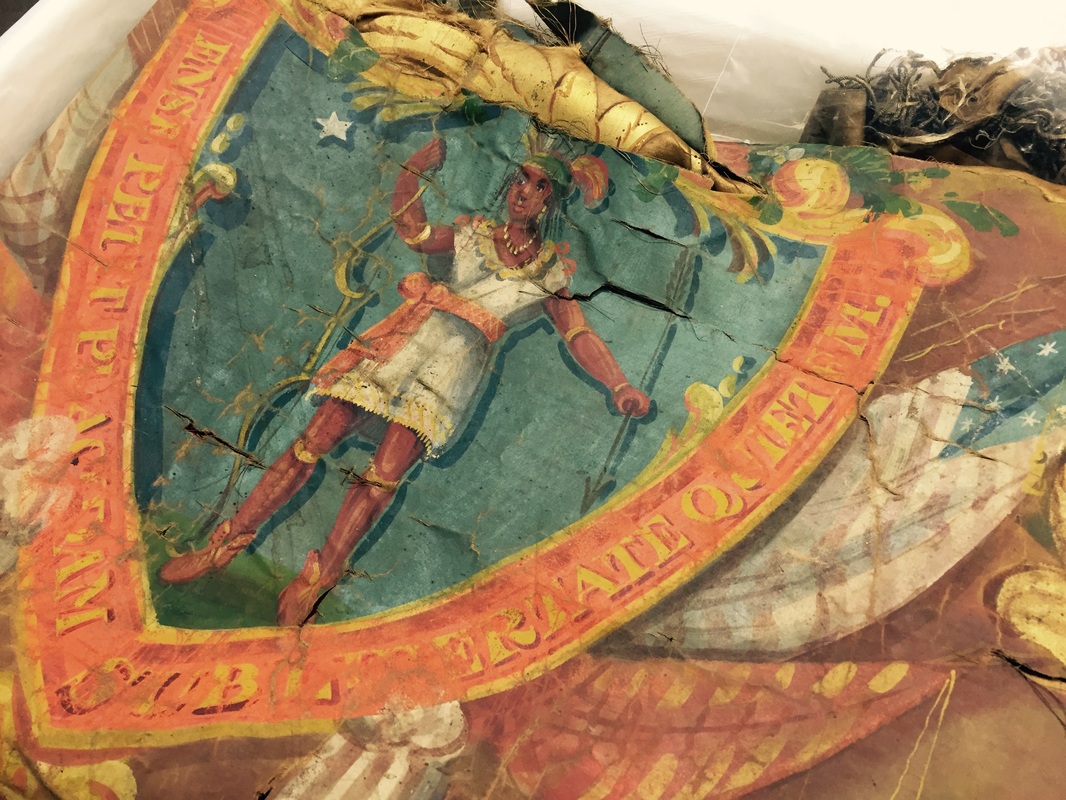
Also on display was the 1822 Crane's Guards Drum that had been conserved by the Society two years ago. By the side of the drum the Society chose to share the Crane's Guard Flag which is the subject of a 2016 CPA  Grant that will conserve and protect this nearly two hundred year-old silk militia flag. The importance of this artifact is that it depicts one of the earliest painted military flags with the Great Seal of Massachusetts on its face. On the obverse is a scene of the Canton Militia mustering at a meeting house with the Great Blue Hill in the background. The flag, once conserved, will be a primary source for scholars and researchers hoping to glean an in-depth understanding of early militias in New England.

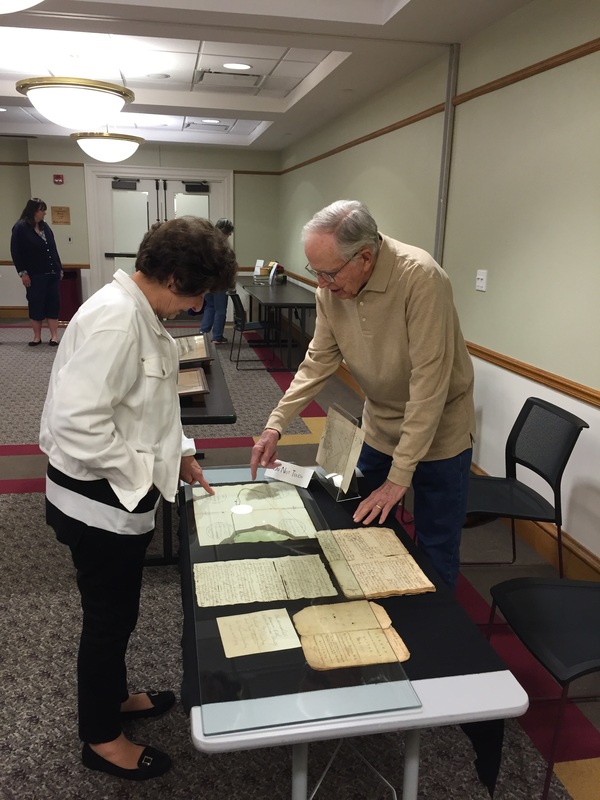
Also on display were a series of rare textile samplers., maps and important colonial documents. All of the items were either candidates for preservation or had been recently preserved by experts. The breadth of the collection on display helped illuminate the importance of preserving our local history in the context of regional and national connections.  The Canton Historical Society is proud to share our stories and artifacts with a greater audience, and the public display certainly made great strides in connecting the donations, grants, and gifts with a wider public and the citizens of Canton. 

1 Comment

Museum of Fine Arts and Canton's Inventor

4/23/2016

1 Comment


Early musical instruments featured at the MFA
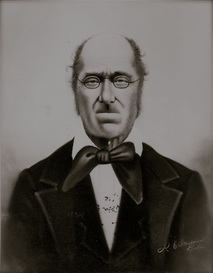
PictureJames Bazin (1798-1893)
On the evening of April 6th, Darcy Kuronen, Curator of Musical Instruments at the MFA, presented a look at the invention and development of the harmonica in the early 1800’s. On hand for demonstration and examination were some rare examples of “mouth organs” by James Wheatstone of London and James Bazin of Canton, Massachusetts. Mr. Kuronen borrowed James Bazin’s early reed creations from the Canton Historical Society for the demonstration. Darcy actually played tunes with these early instruments.

We know Bazin (pronounced Bay-Zahn) continued to develop more intricate and larger reed instruments. In our museum we have several Bazin collectibles including a small harp, 2 organ piano fortes from 1853, couple of reed based lap organs and of course his rare pitch pipe, first harmonica and two trumpet harmonicas. We are told Mr. Bazin played his reed trumpet accompanying the choir at the Unitarian Church in Canton Corner. It is claimed that you could hear his music a mile away! 

Contemporary harmonicas were also discussed and demonstrated by jazz harmonists, Mike Turk. Mike entertained the audience with wonderful tunes from his latest harmonica. 

Learn more about James Bazin, and next time you are at the Histy - ask to hear one of the earliest reed instruments in America. 

1 Comment

    The Histy

    An occasional compendium of news and happenings at the Histy and historic preservation in Canton.

    Archives

    August 2025
    June 2025
    January 2025
    April 2024
    February 2024
    November 2023
    June 2023
    March 2022
    August 2018
    July 2018
    June 2018
    May 2018
    April 2018
    October 2016
    September 2016
    May 2016
    April 2016
    October 2015
    September 2015
    August 2014

    Categories

    All
    Community Preservation Act
    Exhibits
    Fundraising
    Historic Preservation
    Paul Revere Heritage
    Special Events
    Volunteers

    RSS Feed

      Join Our Mailing List

    Subscribe to Newsletter

Location

Contact Us
1400 Washington Street
Canton, MA 02021
​781-615-9040

Become a member today. 

Copyright 2025- Canton Historical Society, Inc.  Canton, Massachusetts